Learning Japanese can help you in many ways. It can support your career, education, travel, and plans to live or work in Japan.
If you are looking for Japanese language classes, a clear study plan can make learning much easier. You can start with basic Japanese and then move step by step to higher levels.
Also, online classes make it possible to learn Japanese from home. You can study with a teacher, practise regularly, and prepare for the JLPT.
In this guide, we will explain what you can learn in Japanese classes, how JLPT levels work, and how to start learning Japanese.
Why Learn Japanese in 2026?
Japanese is useful for both students and working professionals.
For example, Japan is home to many global companies in technology, automobiles, electronics, engineering, and manufacturing. Therefore, Japanese skills can be useful if you want to work in Japan or with a Japanese company.
Japanese can also help if you plan to study in Japan.
In addition, learning the language makes daily life in Japan easier. You can understand signs, speak with local people, shop, travel, and handle simple daily tasks with more confidence.
Most importantly, you do not need to know Japanese before you start. Beginner classes can teach you from the basics.
Learning Japanese can help you:
- Communicate more confidently in Japanese
- Prepare for JLPT examinations
- Explore career opportunities involving Japanese companies
- Study or work in Japan
- Understand Japanese culture and everyday communication
- Build an additional professional skill
You do not need previous Japanese knowledge to begin. A structured beginner course can start with Hiragana, Katakana, basic vocabulary, grammar, and simple conversations.
Online Japanese Language Classes for Beginners
For many learners, online Japanese language classes are a convenient way to start.
Instead of spending time travelling to an institute, students can attend live lessons from home and follow a regular learning schedule.
A good beginner Japanese course should gradually cover:
Hiragana and Katakana: The two basic Japanese writing systems that beginners should learn early.
Vocabulary: Common words used in daily life, introductions, numbers, time, places, family, work, shopping, and travel.
Grammar: Basic sentence structures, particles, verb forms, adjectives, questions, and other important grammar patterns.
Speaking and listening: Practical Japanese for introducing yourself, asking questions, understanding conversations, and communicating in everyday situations.
Reading: Gradual practice with Japanese sentences and beginner-level Kanji.
Learning these skills together creates a stronger foundation than focusing only on vocabulary or grammar.
Japanese Language Classes and JLPT Preparation
Many Japanese learners eventually decide to take the Japanese-Language Proficiency Test (JLPT).
The JLPT has five levels:
N5 → N4 → N3 → N2 → N1
N5 is the introductory level, while N1 is the highest level.
JLPT N5
JLPT N5 is a common starting point for beginners.
Students generally work on basic vocabulary, Kanji, grammar, reading, and listening while becoming familiar with simple Japanese sentences.
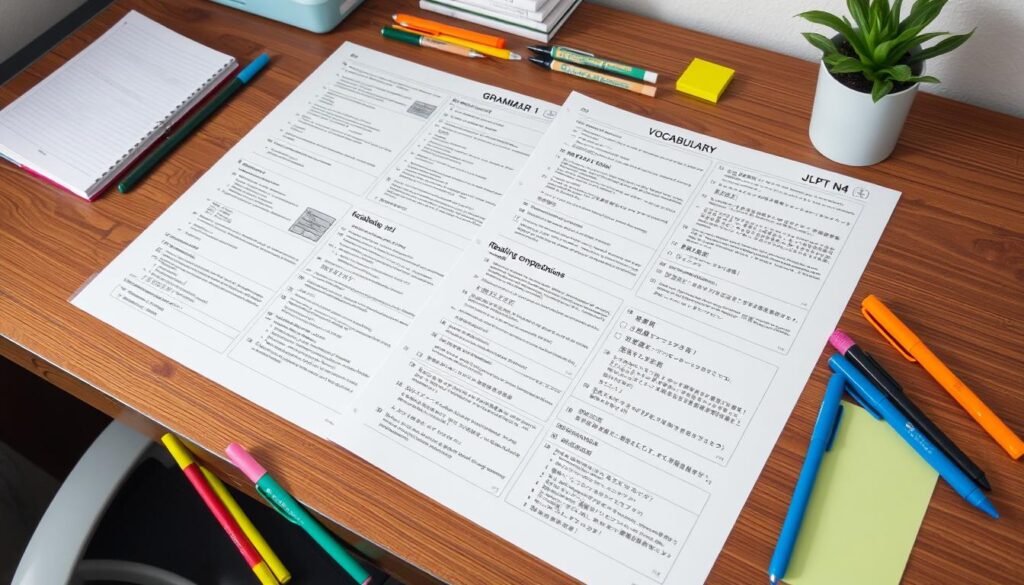
JLPT N4
After building an N5 foundation, learners can progress toward N4.
At this stage, vocabulary and grammar increase, sentences become more complex, and learners need stronger reading and listening skills.
JLPT N3 and Beyond
N3 represents an important intermediate stage for many learners.
Learners progressing toward N2 and N1 need increasingly strong comprehension of Japanese used across everyday, academic, and professional situations.
Rather than studying only to pass an examination, learners should aim to build Japanese skills they can actually use.
How Long Does It Take to Learn Japanese?
There is no single timeline that applies to everyone.
Your progress depends on your current level, study frequency, class schedule, practice outside class, and learning goals.
Someone preparing for JLPT N5 has a different goal from someone who wants to communicate professionally in Japanese.
Consistency matters more than trying to learn everything quickly.
For example, a learner could combine regular classes with daily vocabulary review, Kanji practice, listening, and short reading exercises.
Even 30–45 minutes of focused self-study alongside classes can help reinforce what you learn.
Online Japanese Classes vs Self-Study
You can learn Japanese through books, videos, apps, and free online resources. These resources can be useful, particularly for additional practice.
However, beginners often struggle with questions such as:
“Where should I start?”
“Which grammar should I learn first?”
“Is my pronunciation correct?”
“How should I prepare for JLPT?”
Structured Japanese language classes provide a learning path and give students opportunities to ask questions, practise regularly, and receive guidance.
Self-study can then complement the classes.
A combination of teacher-led learning + regular self-practice can be an effective approach.
Japanese-Language Proficiency Test (JLPT)
Who Can Learn Japanese?
Japanese classes can be useful for many types of learners, including:
- School and college students
- Working professionals
- Engineers and developers
- People planning to study in Japan
- Professionals interested in working with Japanese companies
- JLPT candidates
- Anime and Japanese culture enthusiasts
- Anyone interested in learning a new language
You can begin even if you have never studied Japanese before.
What Should You Look for in Japanese Language Classes?
Before choosing a Japanese course, check what the program actually provides.
Look for a clear curriculum, experienced instructors, speaking and listening practice, grammar explanations, reading exercises, Kanji practice, study materials, regular assessments, and JLPT-oriented preparation if certification is your goal.
Also consider the class format.
For working professionals and students with busy schedules, online classes can make it easier to learn without adding daily travel.
Learn Japanese Online with Koderbox
Koderbox offers online Japanese language classes for learners who want a structured approach to Japanese and JLPT preparation.
Classes focus on building language skills progressively through vocabulary, grammar, reading, listening, speaking, and practical exercises.
Whether you are starting Japanese from the beginning or continuing your JLPT journey, the goal is to help you build a strong foundation before progressing to more advanced levels.
If you want to learn Japanese for your career, JLPT preparation, study plans, travel, or personal interest, you can explore the Japanese language courses available at Koderbox.
Frequently Asked Questions
Can I join Japanese language classes as a complete beginner?
Yes. Beginners can start by learning Hiragana, Katakana, basic vocabulary, grammar, pronunciation, and everyday Japanese sentences.
Which JLPT level should a beginner start with?
JLPT N5 is generally the first JLPT level beginners prepare for. After developing the necessary foundation, students can progress to N4, N3, N2, and N1.
Can I learn Japanese online?
Yes. Online Japanese classes allow learners to study remotely while following structured lessons and practising between classes.
Is Japanese difficult to learn?
Japanese can feel challenging at first because of its writing systems and grammar. A structured learning plan and consistent practice can make the process much more manageable.
Do I need to learn Kanji?
Yes, Kanji becomes an important part of reading Japanese and JLPT preparation. Beginners can start gradually rather than trying to memorize a large number of characters at once.
Are Japanese language classes useful for JLPT preparation?
They can be, particularly when the curriculum covers the vocabulary, grammar, Kanji, reading, and listening skills required for the learner’s target JLPT level.
Start Your Japanese Learning Journey
Learning Japanese takes time, but you do not have to learn everything at once.
Start with the basics, practise consistently, and progress one level at a time.
If you are looking for Japanese language classes online, Koderbox can help you build your Japanese foundation and prepare for the next stage of your learning journey.